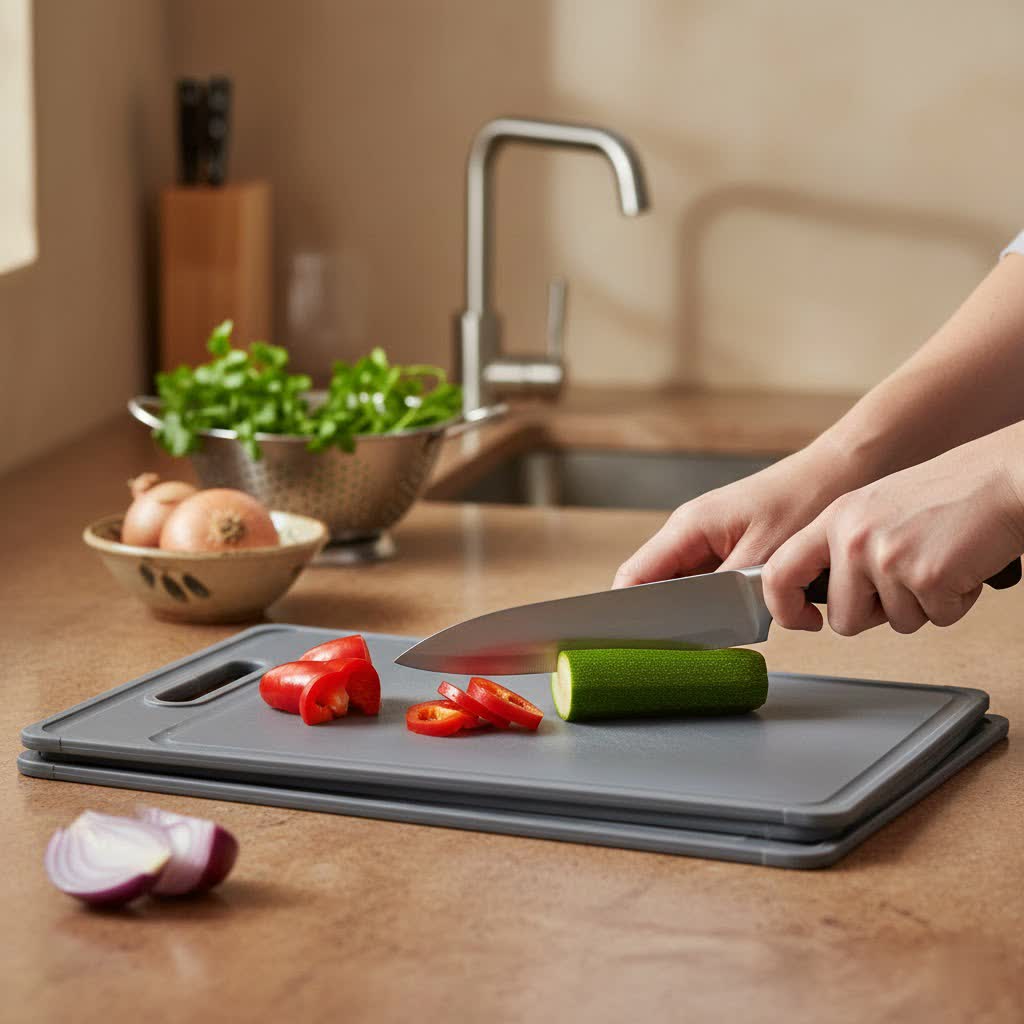
Few kitchen frustrations are as common, or as potentially dangerous, as a cutting board that relentlessly slides across your countertop. One moment you’re confidently dicing vegetables, the next your board has shifted, sending your knife—and your focus—astray. This instability isn’t just an annoyance; it’s a significant safety hazard that can lead to accidental cuts and injuries. As an expert in plastic cutting boards, I understand the nuances that contribute to this common problem and, more importantly, the myriad of effective solutions available. This guide will equip you with both quick fixes and long-term strategies to ensure your plastic cutting board stays firmly in place, transforming your kitchen prep into a safer, more efficient, and more enjoyable experience.
Understanding Why Your Plastic Cutting Board Slides
Why do some cutting boards seem to have a mind of their own, dancing across your kitchen counter with every chop? The answer lies primarily in the interaction between surfaces. Most modern countertops, such as granite, quartz, marble, or even smooth laminate, offer very little friction. Similarly, the underside of many plastic cutting boards is often slick and flat. When two smooth surfaces meet, there’s minimal resistance to lateral force, making them prone to slipping.
The nature of cutting itself also plays a role. When you exert downward and horizontal force on ingredients with a knife, especially during more vigorous tasks like chopping tough vegetables or breaking down poultry, this energy can easily transfer to the cutting board. If the board isn’t sufficiently anchored, it absorbs this force by sliding. Additionally, lighter plastic boards, while convenient for portability and cleaning, inherently offer less inertia to resist movement compared to their heavier wooden counterparts.
Immediate Fixes: Quick Hacks to Stop Slippage
When you’re in the middle of meal prep and your cutting board starts to wander, you need a quick, reliable solution. Fortunately, several simple hacks can provide instant stability using items you likely already have in your kitchen.
The Damp Towel Method
This is arguably the most classic and widely recommended trick for securing a cutting board. The principle is simple: moisture creates a mild suction effect and increases friction between the towel, the countertop, and the cutting board.
- Kitchen Towel: For optimal results, use a thin, tightly woven cotton kitchen towel. Thicker, plush towels can be too spongy, leading to an uneven surface that might cause your board to rock rather than stay firm. Wet the towel thoroughly under the tap, then wring out as much water as possible until it’s just damp. Lay the towel flat and smooth on your countertop, ensuring there are no wrinkles or bunched-up areas, then place your cutting board directly on top. The slight dampness will create the necessary grip.
- Paper Towel: In a pinch, a damp paper towel can serve the same purpose. Wet one or two sheets, wring them out well, and spread them evenly under your board. While not as durable as a cloth towel, it’s a perfectly acceptable temporary fix, especially when cooking away from home.
Museum Gel or Poster Putty
You might know this sticky, reusable putty from securing artwork or preventing decorative items from toppling during an earthquake. It’s surprisingly effective for cutting boards, too. Simply roll small balls of the gel or putty and place one under each corner of your cutting board. Press the board down firmly onto the counter to ensure the putty adheres to both surfaces. This method works particularly well for stiffer, heavier boards, creating a strong, non-damaging bond that prevents movement.
Masking Tape or Painter’s Tape
For a truly temporary, residue-free solution, reach for masking tape or painter’s tape. Flip your plastic cutting board over and apply a strip of tape along each of its four edges, allowing about half the width of the tape to extend beyond the edge. Then, flip the board back over and press down firmly to adhere the protruding tape edges to your countertop. This creates a quick, surprisingly effective barrier against sliding. While not as robust as other methods, it’s ideal for short tasks or when you need minimal effort.
Long-Term Solutions: Enhancing Your Cutting Board’s Grip
While immediate fixes are great for spur-of-the-moment needs, investing in more permanent solutions can significantly improve your daily kitchen workflow and safety. These options require a little upfront effort or investment but pay dividends in consistent stability.
Non-Slip Mats and Liners
These are fantastic, reusable options that provide a dedicated non-slip surface for your cutting board.
- Silicone Mats: High-quality silicone baking mats or dedicated non-slip kitchen mats offer exceptional grip. Their inherent stickiness and flexibility create a robust friction layer. You can simply place one under your cutting board.
- Rubberized Mesh Shelf Liners: Often used to prevent items from sliding in drawers or on shelves, these inexpensive liners can be cut to the exact size of your cutting board. The open mesh design allows for good air circulation, and the rubberized texture provides excellent traction.
Both types of mats can be easily cleaned and stored, making them a practical and reliable long-term solution for various cutting board materials and countertop surfaces.
Attaching Rubber Feet or Silicone Pads
If you’re fond of your current plastic cutting board but it lacks built-in grip, you can easily add your own.
- Adhesive Rubber Feet: Small, self-adhesive rubber feet are readily available at hardware stores or online. Clean and dry the underside of your cutting board thoroughly, then apply one foot to each corner. Press firmly to ensure a strong bond. These offer a semi-permanent solution that significantly elevates the board, allowing for easier handling and improved hygiene.
- Screw-on Rubber Feet: For a truly permanent attachment, some rubber feet are designed to be screwed into the board. This is best for thicker plastic boards and ensures the feet will never detach. Keep in mind that once attached, these generally mean the board is single-sided, as the feet will prevent you from flipping it over for use.
Purpose-Built Non-Slip Cutting Boards
The easiest long-term solution might be to choose a plastic cutting board designed with stability in mind from the outset. Many modern plastic cutting boards come equipped with integrated non-slip features.
- Rubberized Edges or Feet: These boards feature a strip of rubber or silicone around the perimeter or small rubber feet embedded in the corners of the underside. These elements provide excellent grip on smooth countertops, eliminating the need for external mats or towels.
- Textured Undersides: Some plastic boards incorporate a subtle texture or pattern on their bottom surface to enhance friction. While less effective than dedicated rubber components, they offer an improvement over completely smooth boards.
When shopping for a new cutting board, actively look for these anti-slip design elements to ensure maximum safety and stability right out of the box.
Choosing the Right Plastic Cutting Board for Stability
Beyond adding accessories, the inherent design of a plastic cutting board can greatly influence its tendency to slide. Making an informed choice when purchasing can save you a lot of hassle down the line.
Material and Surface Texture
While most plastic cutting boards are made from polyethylene (PE) or polypropylene (PP), subtle differences in their finish can affect grip. A board with a slightly textured bottom surface will naturally offer more resistance to sliding than one that is perfectly smooth. Some manufacturers also incorporate specific materials or patterns to boost friction.
Weight and Thickness
Generally, a heavier, thicker plastic cutting board is less prone to sliding than a thin, lightweight one. The added mass provides greater inertia, making it harder for the board to move under the force of cutting. While lighter boards are convenient for storage and dishwashing, a robust, thicker board often translates to superior stability. Consider your primary use: for heavy-duty chopping, a more substantial board is a wise investment.
Integrated Non-Slip Features
As mentioned earlier, many high-quality plastic cutting boards now feature integrated non-slip elements. These can include:
- Molded Rubber Grips: Often seen as discreet rubber corners or strips that are part of the board’s mold.
- Recessed Silicone Pads: Small, durable silicone pads strategically placed to elevate the board slightly and grip the counter.
- Full-Perimeter Non-Slip Edges: Some boards have a rubberized rim that provides continuous grip around the entire board.
Prioritizing these features during your purchase ensures that stability is built-in, offering peace of mind every time you cook.
Maintaining Your Non-Slip Solutions
To ensure your non-slip methods remain effective, a little maintenance goes a long way.
- Cleaning Mats and Feet: Non-slip mats, whether silicone or mesh, should be washed regularly with soap and hot water, just like your cutting board. Food debris or grease can reduce their gripping power. For rubber feet attached to your board, simply ensure they are clean during your regular board washing routine.
- Replacing Worn Components: Over time, adhesive rubber feet can lose their stickiness, and non-slip mats may degrade. If you notice your board starting to slide again with a previously effective solution, it might be time to replace the worn components.
- Proper Storage: Store non-slip mats flat or rolled, avoiding sharp creases that could damage their structure. For boards with integrated rubber feet, store them in a way that doesn’t put undue pressure on the feet, which could deform them over time and compromise their grip.
Common Mistakes to Avoid
Even with the best intentions, certain habits can undermine your efforts to secure a plastic cutting board.
- Using Overly Wet Towels: While a damp towel is effective, a soaking wet towel can create too much cushioning, causing your board to wobble or rock. Always wring out excess water thoroughly.
- Ignoring Warped Boards: Plastic boards, especially thinner ones, can sometimes warp over time, leading to an uneven surface that will rock even with a non-slip solution underneath. If your board is significantly warped, it’s safer to replace it.
- Dull Knives: A dull knife requires more force to cut, which increases the likelihood of your board sliding. Keeping your knives sharp reduces the pressure needed, making for a safer and more stable cutting experience.
Conclusion
A sliding plastic cutting board is more than just a minor kitchen nuisance; it’s a genuine safety concern that can lead to painful accidents. By understanding the physics behind slippage and employing the right techniques and tools, you can transform your kitchen into a safer, more efficient space. Whether you opt for a simple damp towel, invest in a dedicated non-slip mat, or choose a plastic cutting board with built-in gripping features, achieving stability is straightforward and achievable for every home cook. Don’t let a wobbly board compromise your culinary confidence or risk your safety. Take a moment to secure your foundation, and you’ll find yourself chopping, slicing, and dicing with newfound ease and precision.
What’s your go-to method for keeping your cutting board firmly in place during your busiest kitchen moments?
Frequently Asked Questions
Why does my plastic cutting board slide so much?
Plastic Cutting Boards often slide due to the lack of friction between their smooth underside and slick countertops like granite or quartz. The force exerted during chopping can easily overcome the minimal resistance, causing the board to shift.
Can I use a dry towel instead of a damp one?
While a dry towel can offer some friction, it’s generally not as effective as a damp one. The slight moisture in a damp towel creates a better suction effect and significantly increases the grip, providing superior stability for your cutting board.
Are cutting boards with rubber feet better?
Yes, cutting boards with integrated rubber feet or edges are often considered better for stability. These specialized designs provide excellent grip on various countertop surfaces, eliminating the need for separate non-slip mats or towels and ensuring consistent, built-in safety.
How often should I clean non-slip mats?
Non-slip mats should be cleaned regularly, ideally after each use or as frequently as your cutting board, especially if they come into contact with food debris or grease. Keeping them clean ensures their grippy texture remains effective and hygienic.
What’s the most permanent solution to stop a cutting board from sliding?
The most permanent solutions involve either purchasing a high-quality cutting board with built-in rubberized feet or edges, or attaching screw-on rubber feet to your existing board. These methods provide durable, long-lasting stability without requiring extra setup each time you cook.