In the bustling heart of any kitchen, plastic cutting boards are indispensable tools, silently enduring countless chopping, slicing, and dicing tasks. For many home cooks and culinary professionals alike, the allure of effortlessly sanitizing these workhorses in the dishwasher is strong. But how do you ensure they emerge not only sparkling clean but also undamaged and hygienically safe? This comprehensive guide will walk you through the proper techniques to safely wash your plastic cutting boards in the dishwasher, maintaining their longevity and upholding the highest standards of kitchen hygiene.
The Dishwasher Debate: Can Plastic Cutting Boards Really Go In?
The good news for busy kitchens is that, generally speaking, most plastic cutting boards are indeed designed to be dishwasher-safe, offering a significant advantage in terms of convenience and sanitation. Unlike their wooden or bamboo counterparts, which are prone to warping, cracking, or splitting when exposed to the dishwasher’s intense heat and moisture, plastic boards can typically withstand these conditions. The non-porous nature of most plastics makes them less susceptible to absorbing water and harboring bacteria deep within their surface, a common concern with natural materials. This makes dishwashing an especially effective method for sanitizing the inevitable knife marks and grooves that accumulate over time, where harmful pathogens can otherwise hide.
Identifying Dishwasher-Safe Plastic Boards
Before tossing any plastic board into your appliance, it’s crucial to confirm its dishwasher compatibility. Always check the manufacturer’s label or product instructions for a “dishwasher-safe” indication. This symbol or text is your primary assurance that the board can withstand the high temperatures and powerful detergents of a dishwasher cycle. Generally, plastic cutting boards made from polypropylene (PP) or High-Density Polyethylene (HDPE) are robust and well-suited for machine washing. However, exercise caution with ultra-thin or overly flexible plastic cutting mats. These lighter, more pliable materials are far more susceptible to melting, warping, or deforming under the dishwasher’s heat, particularly when exposed to the heating element in the lower rack.
Best Practices for Loading Your Plastic Cutting Boards
Proper placement within the dishwasher is paramount to preventing damage and ensuring effective cleaning. The golden rule for plastic cutting boards is to always place them on the top rack. The bottom rack, being closer to the heating element, experiences significantly higher temperatures, which can easily cause thinner or less resilient plastic boards to melt, warp, or lose their shape. When loading, ensure the boards lie as flat as possible or are securely propped upright against other dishes or rack tines. This not only minimizes the risk of warping by distributing heat evenly but also allows water jets and detergent to thoroughly clean all surfaces. Avoid overcrowding the dishwasher, as this can obstruct water flow and result in poorly cleaned items.
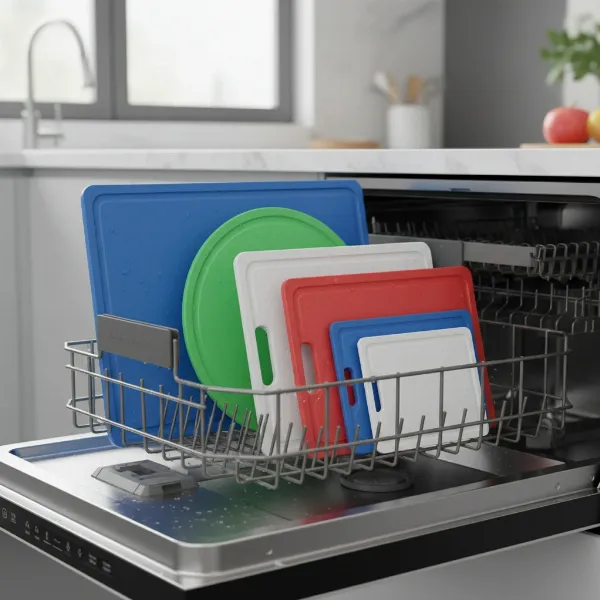 Plastic cutting boards neatly arranged on the top rack of a dishwasher, emphasizing safe placement for washing and sanitizing.
Choosing the Right Dishwasher Settings
To achieve optimal cleanliness and sanitization for your plastic cutting boards, selecting the appropriate dishwasher settings is key. For true sanitization, especially after preparing raw meats, poultry, or fish, a hot wash cycle is essential. Dishwashers are designed to heat water to temperatures well above what can be achieved by hand washing—typically at least 165°F (74°C)—which is crucial for effectively killing harmful bacteria and pathogens. Many modern dishwashers also feature dedicated “Sanitize” or “Antibacterial” cycles, which are ideal for this purpose, guaranteeing the necessary heat exposure. For everyday cleaning, a regular wash cycle combined with a standard dishwasher detergent is usually sufficient. Ensure you use a high-quality detergent designed for dishwashers to break down food residues and grease effectively.
Preventing Warping and Melting: Essential Tips
While dishwashing offers convenience, vigilance is necessary to protect your plastic cutting boards from warping or melting. The primary safeguard, as mentioned, is consistently using the top rack. The intense heat from the lower heating element can be unforgiving on plastics, so keeping them elevated is your best defense. Another consideration is the drying cycle. While a hot dry cycle aids in overall sanitization by ensuring items are completely dry, some users opt for an air-dry or low-heat dry setting for particularly thin or sensitive plastic boards to further minimize warping risks. However, balancing this with the complete sanitization achieved by thorough hot drying is important. Thicker plastic boards inherently offer more resilience against high temperatures and are less likely to deform compared to their flimsier counterparts. Regardless of the chosen cycle, allowing your boards to cool naturally within the dishwasher or in a well-ventilated area after the cycle finishes helps them retain their shape.
Beyond the Wash Cycle: Drying and Storage
Once the wash cycle is complete, the process isn’t over. Thorough drying is critical for maintaining hygiene and preventing bacterial growth on your plastic cutting boards. While many dishwashers offer effective drying, if your boards still feel damp, it’s vital to air dry them completely before storage. Standing them vertically in a dish rack allows for maximum air circulation, ensuring all moisture evaporates. Proper storage also plays a role in preventing future warping. Store boards flat in a drawer or cabinet, or vertically in a dedicated rack, to avoid uneven pressure that can lead to bending over time. A dry, well-ventilated storage area is always best to deter any potential moisture-related issues.
Maintaining and When to Replace Your Plastic Cutting Board
Regular dishwashing after each use, especially when handling raw proteins, is a cornerstone of good kitchen hygiene. However, plastic cutting boards, like all kitchen tools, have a lifespan. Over time, knife blades will inevitably create cuts and grooves on the surface. These deeper imperfections, while initially minor, can become difficult to clean and sanitize effectively, turning into potential breeding grounds for bacteria. When scratches become prominent, deep, or discolored despite diligent cleaning, it’s a clear sign that it’s time to replace the board. While some professional-grade plastic boards can be resurfaced by sanding, for most home users, replacement is the more practical and hygienic option. For persistent stains that even a dishwasher can’t tackle, a pre-treatment with a paste of baking soda and hydrogen peroxide can often help brighten the surface before a run in the dishwasher.
“For the safest and most efficient cleaning of plastic cutting boards, the dishwasher is your ally. Its high temperatures ensure sanitation, but always prioritize the top rack to prevent warping and extend the life of your boards.” – Admin, Reviewfren.com, Kitchenware Expert
Conclusion
Safely washing plastic cutting boards in your dishwasher is a convenient and highly effective way to maintain a hygienic kitchen environment. By understanding which boards are suitable for machine washing, prioritizing top-rack placement, utilizing hot wash cycles for sanitization, and ensuring proper drying and storage, you can keep your kitchen tools pristine and prolong their usefulness. While plastic boards are durable, recognizing when deep scratches necessitate replacement is crucial for preventing bacterial buildup and ensuring food safety. Embrace the power of your dishwasher, and enjoy the peace of mind that comes with a truly clean cutting surface. What’s your go-to method for keeping your kitchen tools pristine?
Frequently Asked Questions
Can I put any plastic cutting board in the dishwasher?
Table is empty.No, not all plastic cutting boards are dishwasher-safe. Always check the manufacturer’s label for a “dishwasher-safe” indication. Thin, flexible plastic mats are more prone to melting or warping and should be hand-washed or placed carefully on the top rack with cooler settings if absolutely necessary.
Will my plastic cutting board melt or warp in the dishwasher?
Plastic cutting boards can melt or warp, especially if placed on the bottom rack close to the heating element or if they are very thin. To prevent this, always place them on the top rack and ensure they are securely positioned so they don’t shift during the wash cycle.
Which rack is best for plastic cutting boards in the dishwasher?
The top rack is always the best place for plastic cutting boards. This area of the dishwasher experiences less intense heat than the bottom rack, significantly reducing the risk of your boards melting, warping, or deforming.
How hot should the water be to sanitize plastic cutting boards?
For proper sanitization, the water in your dishwasher should reach at least 165°F (74°C). Many dishwashers have “Sanitize” or “Antibacterial” cycles specifically designed to achieve these high temperatures, ensuring harmful bacteria are effectively killed.
How often should I replace my plastic cutting board?
You should replace your plastic cutting board when it develops deep cuts, grooves, or excessive knife marks that are difficult to clean. These imperfections can harbor bacteria, making it challenging to maintain proper hygiene, even with dishwashing.
Can dishwashing remove stains from plastic cutting boards?
Dishwashing can help remove many everyday stains from Plastic Cutting Boards. For stubborn or deeply set stains, a pre-treatment with a solution like baking soda and hydrogen peroxide before placing it in the dishwasher can often be more effective.