Selecting the right cutting board is a fundamental decision for any home chef, impacting everything from food safety to knife longevity. Among the myriad options available, plastic cutting boards have carved out a significant niche, celebrated for their practicality and hygiene. Today, we’re diving deep into a specific contender: the Cuisinart Non-Slip Plastic Board. Is it truly the steadfast companion your kitchen needs? With over a decade of experience as a kitchen technician at Reviewfren.com, I’ve put countless boards through their paces, and I’m here to offer an honest, comprehensive look at Cuisinart’s offering, guiding you through its features, performance, and whether it deserves a spot on your countertop.
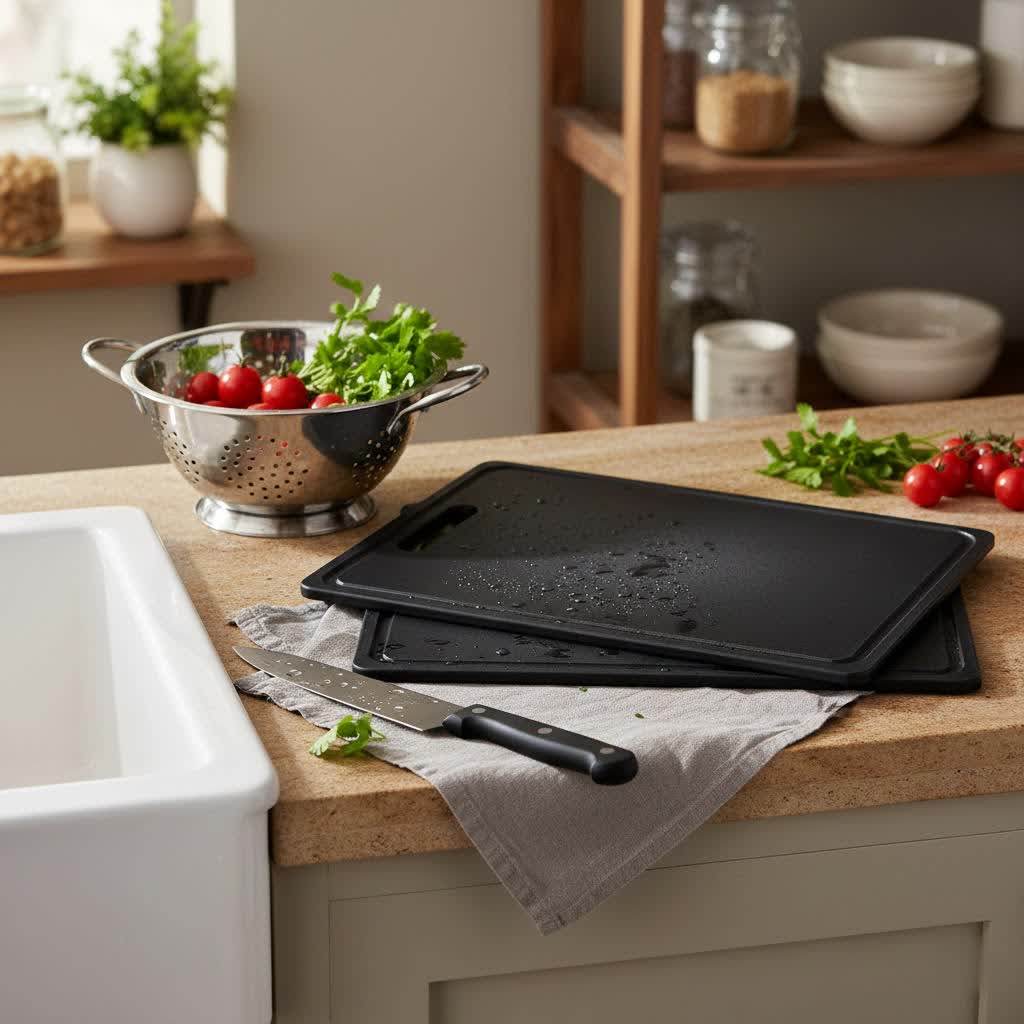
The Enduring Appeal of Plastic Cutting Boards
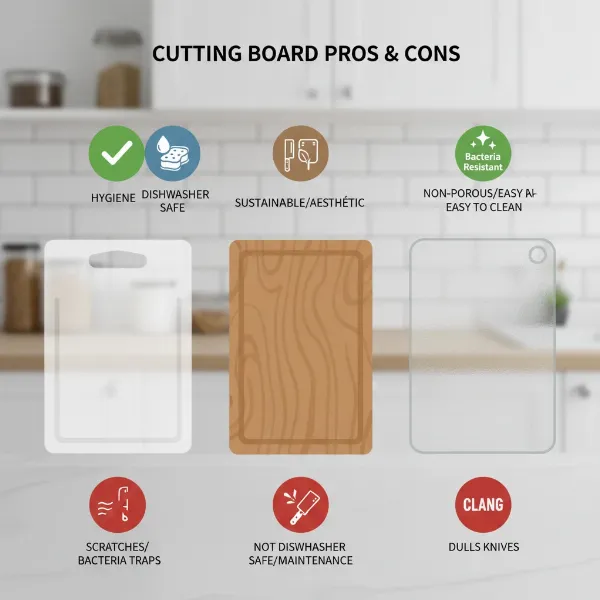
Plastic cutting boards have long been a staple in both home and professional kitchens, primarily due to their perceived hygienic advantages and straightforward maintenance. Unlike porous materials such as wood or bamboo, plastic boards are often non-absorbent, making them less prone to harboring bacteria if cleaned properly. This characteristic is particularly appealing for preparing raw meats and poultry, where stringent sanitation is paramount to prevent cross-contamination.
When compared to their wooden counterparts, plastic boards typically offer a more budget-friendly entry point and are almost universally dishwasher-safe, simplifying cleanup after a busy cooking session. While wood boards are often lauded for their aesthetic appeal and knife-friendliness, they demand more rigorous care, including regular oiling and hand washing, to prevent warping, cracking, and bacterial growth. Glass or stone boards, though attractive and non-porous, are notoriously hard on knives, dulling blades quickly and potentially creating micro-shards. This positions plastic boards as a practical, low-maintenance alternative that balances cost, hygiene, and reasonable durability.
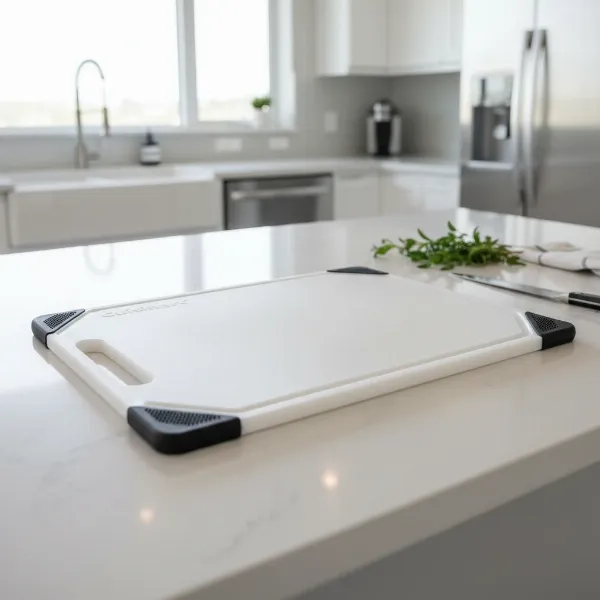 Cuisinart Non-Slip Plastic Cutting Board on a kitchen counter, showcasing its non-slip trim
Cuisinart Non-Slip Plastic Board: Features at a Glance
The Cuisinart Non-Slip Plastic Board is designed with everyday functionality and safety in mind. At its core, it’s a utilitarian kitchen tool crafted to withstand the demands of daily food preparation.
Constructed from durable plastic (polypropylene), this board aims to offer a sturdy and reliable cutting surface. A standout feature, as its name suggests, is the incorporation of non-slip silicone grips. These grips are strategically placed on the bottom perimeter of the board, designed to prevent unwanted movement and sliding on your countertop, enhancing safety during use.
While available in various sizes, common dimensions include an 11-inch variant, typically featuring a slim profile of about 0.25 inches thick, making it lightweight and easy to store. The board generally comes in a classic white color with contrasting black non-slip trim, offering a clean and modern aesthetic that fits into most kitchen decors. Many Cuisinart plastic boards also boast a reversible design, providing two usable surfaces for different tasks, further minimizing cross-contamination if you dedicate one side for specific ingredients. For added convenience, these boards are proudly dishwasher safe, ensuring effortless sanitation. Cuisinart backs the durability of these boards with a lifetime warranty, a testament to their confidence in the product’s construction.
Performance Review: Putting it to the Test
When evaluating a cutting board, real-world performance is paramount. The Cuisinart Non-Slip Plastic Board makes several promises, and it’s essential to see how it holds up to the rigors of the kitchen.
Non-Slip Performance
Table is empty.The “non-slip” aspect is a critical differentiator for this Cuisinart board. The silicone grips on the bottom deliver excellent stability, keeping the board firmly anchored to the countertop even during aggressive chopping or slicing. This feature is particularly valuable when handling wet ingredients or working on slick surfaces, preventing dangerous slips and ensuring precise cuts. For many users, this alone makes the board a worthwhile investment, as a stable cutting surface is fundamental to kitchen safety and efficiency.
Knife Friendliness & Durability
Plastic cutting boards generally exist in a delicate balance between durability and knife-friendliness. The Cuisinart board, made from robust poly material, exhibits good resistance to common scratches and warping, suggesting it can endure regular use without quickly showing significant wear. However, like most plastic boards, it will eventually develop knife marks and grooves over time. While the material is designed to be sturdy, consistent cutting will inevitably leave traces. The claim of being “easy on knives” is somewhat subjective for plastic; while it won’t dull your blades as quickly as glass or ceramic, it may not be as forgiving as a softer wood board over the long term. The impressive lifetime warranty, however, provides a significant safety net, offering peace of mind regarding the board’s longevity.
Hygiene & Cleaning
Ease of cleaning and sanitation is where plastic cutting boards, including this Cuisinart model, truly shine. Being entirely dishwasher safe, the board can be tossed into the dishwasher after use for a thorough and convenient cleaning cycle. This capability ensures that food particles and potential bacteria are effectively removed, promoting excellent kitchen hygiene. For quick cleanups, a simple hand wash with soap and water is also sufficient, and the non-porous surface prevents staining from vibrant ingredients like beets or turmeric, maintaining its clean appearance.
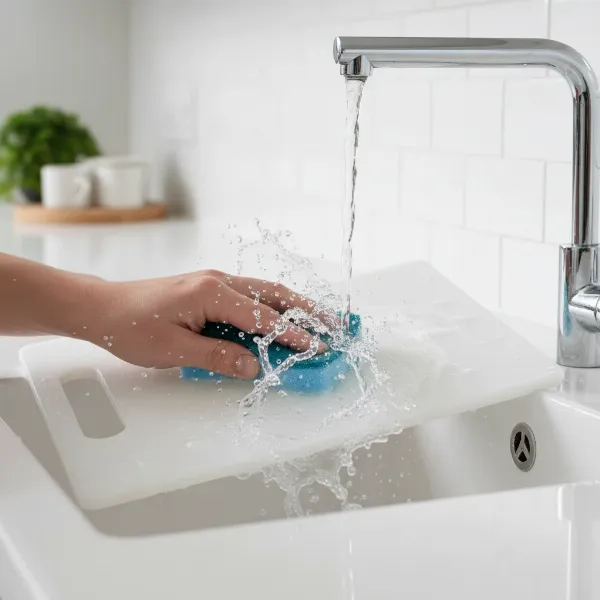 Close-up of a plastic cutting board being easily cleaned under running water, emphasizing hygiene
Versatility
The Cuisinart Non-Slip Plastic Board proves to be a versatile workhorse for various kitchen tasks. Its sturdy surface is well-suited for chopping a wide array of ingredients, from hearty vegetables and fruits to raw meats and poultry. Many users appreciate the option of owning multiple boards—perhaps color-coded—to prevent cross-contamination between different food groups. Its manageable size makes it ideal for everyday prep, whether you’re dicing a single onion or preparing components for a larger meal. While some models may lack deep juice grooves, its primary function as a reliable, stable cutting surface is consistently met across different culinary applications.
Pros of the Cuisinart Non-Slip Plastic Board
This cutting board brings several compelling advantages to the kitchen:
- Exceptional Stability: The integrated silicone grips effectively prevent the board from sliding, making for a safer and more confident cutting experience.
- Effortless Cleaning & Sanitation: Its dishwasher-safe nature ensures quick, thorough cleaning, essential for maintaining hygiene and preventing bacterial growth.
- Robust Durability: Made from sturdy plastic, it resists warping and many scratches, and is backed by a valuable lifetime warranty, signifying Cuisinart’s commitment to quality.
- Cost-Effectiveness: Plastic boards are generally affordable, offering great value without compromising essential features.
- Versatile Application: Suitable for all types of food preparation, from meats to produce, supporting various culinary needs.
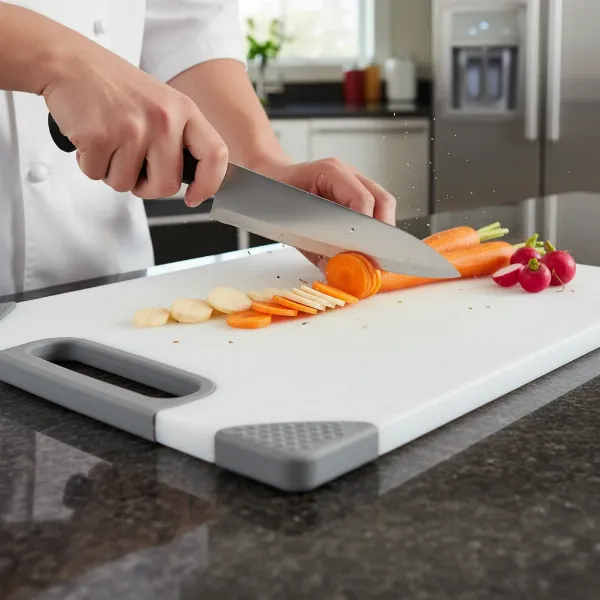 A sharp chef's knife in action on a Cuisinart non-slip plastic board, showing stability and precision
Cons & Considerations
Despite its strengths, it’s important to acknowledge potential drawbacks and general considerations for plastic cutting boards:
- Knife Marks and Gouges: Over time, consistent knife use will inevitably lead to visible cut marks and grooves on the plastic surface. These grooves, if not properly cleaned, can potentially harbor bacteria and microplastics, necessitating eventual replacement.
- Knife Durability: While not as damaging as glass, plastic boards can still be harder on knife edges than softer wood or composite materials, potentially requiring more frequent sharpening for high-end knives.
- Environmental Concerns: The production and disposal of plastic products raise environmental questions, though some brands are exploring recycled plastic options.
- Lack of Deep Juice Grooves: Depending on the specific model and size, some Cuisinart plastic boards may not feature deep juice grooves, which could be a minor inconvenience when carving juicy meats.
Comparing with Other Cutting Board Materials
To truly appreciate the Cuisinart Non-Slip Plastic Board, it’s useful to place it in context with other common cutting board materials:
- Wood: Wooden boards, especially end-grain varieties, are renowned for being gentle on knives and possessing natural antibacterial properties. They offer a beautiful aesthetic and can be very durable with proper care (oiling, hand washing). However, they are more expensive, require higher maintenance, and are not typically dishwasher safe.
- Bamboo: A popular eco-friendly alternative, bamboo boards are durable, dense, and naturally resistant to bacteria. They are harder than wood but generally kinder to knives than plastic. Like wood, they usually require hand washing and occasional oiling.
- Glass/Stone: These materials are highly hygienic and aesthetically pleasing, resisting stains and odors completely. However, their hardness is detrimental to knife edges, causing rapid dulling, and they offer virtually no grip, making them potentially hazardous without non-slip feet.
The Cuisinart Non-Slip Plastic Board strikes a balance, offering the low maintenance and hygiene of plastic with an enhanced safety feature (non-slip grips) that many other materials lack without added accessories.
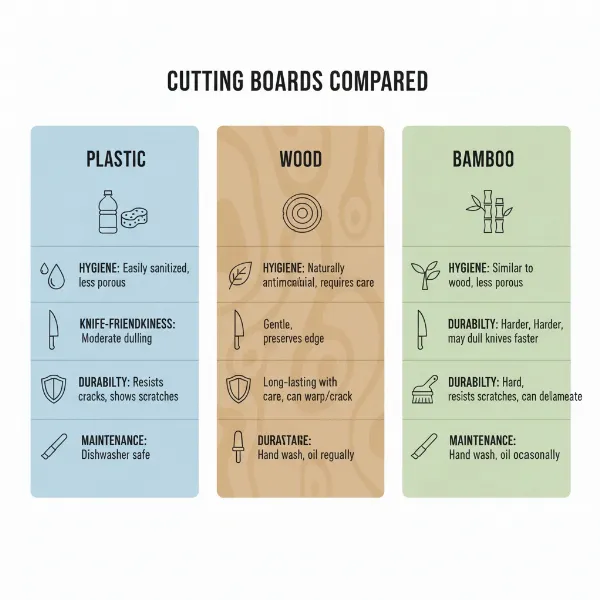 Infographic comparing different cutting board materials like plastic, wood, and bamboo
Who is the Cuisinart Non-Slip Plastic Board For?
This board is an excellent choice for a variety of users:
- The Everyday Home Cook: Its ease of use, cleaning, and stable surface make daily meal prep less stressful and more efficient.
- Beginners: The non-slip feature provides an added layer of safety, which is particularly beneficial for those new to knife skills.
- Hygiene-Conscious Individuals: Those who prioritize thorough sanitation and appreciate dishwasher-safe kitchen tools will find this board appealing, especially for handling raw ingredients.
- Budget-Minded Shoppers: Offering a good balance of features and durability at an accessible price point, it’s a smart economic choice.
- Small Kitchens: Its typically slim profile makes it easy to store in cramped spaces.
> “A stable cutting surface isn’t just a convenience; it’s a fundamental safety measure in any kitchen. The Cuisinart Non-Slip Plastic Board addresses this critical need effectively.”
Conclusion
The Cuisinart Non-Slip Plastic Board stands out as a reliable and practical tool for any kitchen. Its key strengths lie in its exceptional non-slip stability, effortless cleanup, and the reassuring promise of a lifetime warranty. While it shares some common considerations with all plastic cutting boards, such as potential knife marks over time, its advantages for hygiene and safety make it a compelling option. For home cooks seeking a durable, easy-to-maintain, and secure cutting surface, this Cuisinart board delivers solid performance. By understanding its features and managing expectations regarding long-term knife-friendliness, you can confidently integrate this board into your daily cooking routine.
What aspects do you value most in a cutting board, and how does Cuisinart’s non-slip design fit into your ideal kitchen setup?
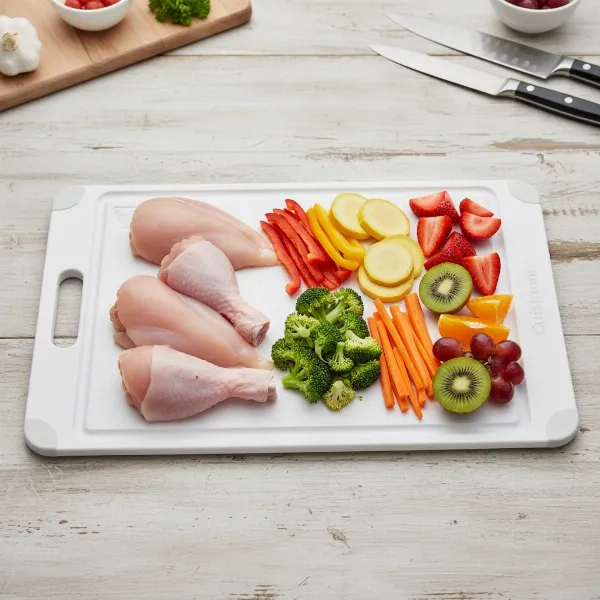 Various foods being prepared on a Cuisinart non-slip plastic board: meat, vegetables, and fruit
Frequently Asked Questions
Is the Cuisinart Non-Slip Plastic Board truly resistant to scratches?
While the Cuisinart Non-Slip Plastic Board is designed with a sturdy poly material that resists many common scratches, like all Plastic Cutting Boards, it will inevitably show knife marks and grooves over prolonged use. Regular, heavy cutting will create visible traces on the surface.
Can I use the Cuisinart Non-Slip Plastic Board for raw meat and poultry?
Absolutely. Its non-porous plastic surface and dishwasher-safe nature make it an excellent choice for preparing raw meats and poultry, as it can be thoroughly sanitized after each use to prevent cross-contamination. Many chefs recommend having separate boards for raw ingredients and produce.
How does the non-slip feature work on this Cuisinart board?
The board incorporates silicone grips, typically along its bottom edges or corners. These grips create friction with your countertop, effectively preventing the board from sliding or shifting during chopping, dicing, or slicing, enhancing user safety.
Is the Cuisinart Non-Slip Plastic Board gentle on my knives?
Compared to harder surfaces like glass or ceramic, the plastic material of the Cuisinart board is more forgiving. However, it may not be as soft on knife edges as some end-grain wooden boards, meaning very sharp knives might require more frequent honing or sharpening over time.
What is the advantage of the lifetime warranty offered by Cuisinart?
The lifetime warranty signifies Cuisinart’s confidence in the board’s durability and construction quality. It provides assurance that if the board fails due to manufacturing defects or ordinary wear and tear, Cuisinart will likely replace or repair it, offering long-term value and peace of mind.