In today’s fast-paced kitchens, the idea of simplifying with a single cutting board for all your culinary tasks might seem efficient. However, this seemingly convenient practice introduces significant risks, primarily that of cross-contamination, a leading cause of foodborne illness. Understanding these dangers and implementing stringent hygiene protocols are paramount to ensuring a safe cooking environment for you and your family. This guide delves into the realities of using one board for everything, offering practical strategies and insights to maintain peak kitchen hygiene.
The Risky Business of “One Board for Everything”
While tempting for its perceived simplicity, relying on a single cutting board for every ingredient – from raw chicken to fresh salad greens – is a practice fraught with peril. The invisible transfer of harmful bacteria from one food type to another, known as cross-contamination, poses a serious threat. Raw meats, poultry, and seafood naturally harbor bacteria like Salmonella, E. coli, and Campylobacter. If these pathogens are transferred to foods that will be eaten raw or lightly cooked, such as fruits and vegetables, they can cause severe illness. The convenience of a single board can quickly turn into a health hazard if not managed with extreme caution.
Understanding Cross-Contamination in Your Kitchen
Cross-contamination is the unwelcome guest in many kitchens, silently spreading bacteria. It occurs when pathogens are transferred from one food item to another, or from a contaminated surface (like a cutting board or knife) to food. This can happen directly, such as raw meat juices dripping onto vegetables, or indirectly, by using the same unwashed cutting board or utensil for different food types. Even seemingly clean surfaces can harbor bacteria if not properly sanitized. Deep knife grooves on a cutting board are particularly notorious for trapping food particles and bacteria, making them difficult to clean effectively.
Best Practices for Optimal Food Safety: Multiple Boards
For optimal food safety, the consensus among culinary professionals and health organizations is clear: use separate cutting boards for different food categories. This strategy is the most effective way to prevent cross-contamination. Many professional kitchens adopt a color-coded system:
- Red: Raw Meat
- Blue: Raw Fish
- Green: Fruits and Vegetables
- Yellow: Cooked Meat
- White: Dairy and Baked Goods
While a full set might be overkill for a home kitchen, having at least two distinct boards – one exclusively for raw meats and seafood, and another for produce and cooked foods – is a highly recommended and achievable standard. This simple separation drastically reduces the risk of transferring harmful bacteria.
When You Must Use One Board: Hygiene Strategies
Life happens, and sometimes, a single cutting board is all you have. In such scenarios, rigorous hygiene strategies become non-negotiable. The key is strict sequencing and meticulous cleaning between each food type.
Here’s how to minimize risk:
- Start with Ready-to-Eat Foods: Always begin by chopping or preparing foods that will be consumed raw, such as vegetables for a salad or fruit. Once done, transfer them to a clean bowl and thoroughly clean the board and knife.
- Move to Cooked Foods: If you have cooked meats or other items that won’t require further cooking, prepare these next, followed by immediate cleaning.
- Finish with Raw Meats/Seafood: Raw poultry, meat, or fish should always be the last item you prepare on your single board. After cutting, immediately transfer to cooking vessels and initiate your most thorough cleaning and sanitization process.
- No Backtracking: Never go back to cutting ready-to-eat foods on a board that has touched raw meat, even if you intend to clean it, unless you’ve performed a full sanitization.
This methodical approach, combined with stringent cleaning, is your best defense against cross-contamination when resources are limited.
Choosing the Right Board for Versatility (If Single-Board Use is Unavoidable)
If you absolutely must rely on one cutting board for various tasks, the material choice becomes even more critical. Certain materials offer better hygiene properties when versatility is demanded.
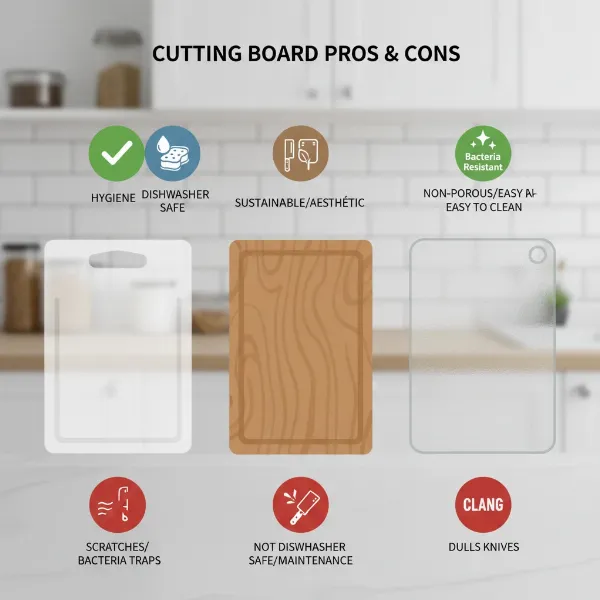
- High-Density Polyethylene (HDPE) Plastic: This is often the top recommendation for a versatile board. It’s non-porous, meaning it doesn’t absorb liquids or harbor bacteria as easily as more porous materials. Most plastic boards are also dishwasher safe, allowing for high-temperature sanitization. However, regularly inspect plastic boards for deep knife grooves, which can become bacterial havens.
- Wood: While beautiful and gentle on knives, wooden boards are more porous. Hardwoods like maple can possess natural antimicrobial properties, but they require careful hand-washing and thorough drying to prevent warping and bacterial growth. They are generally not recommended for raw meats if you can avoid it, especially if also used for other foods.
- Bamboo: A type of grass, bamboo is harder than most woods and less porous. It shares some of the same care requirements as wood.
- Glass or Steel: These materials are entirely non-porous and extremely easy to clean and sanitize. However, they are notoriously harsh on knife blades, dulling them quickly and potentially creating a hazardous cutting surface as knives slip. They are generally not recommended for regular use.
For a single-board kitchen, a durable, non-porous plastic board that can withstand frequent and intense cleaning is often the most practical choice.
“A common misconception is that a quick rinse is enough. In reality, thorough scrubbing with hot soapy water, followed by sanitization, is non-negotiable when a board has handled raw proteins.”
Advanced Cleaning and Sanitization Techniques
Proper cleaning goes beyond a simple rinse. For a board used with raw meats, especially if it’s your only board, sanitization is essential.
Basic Cleaning:
Immediately after each use, scrape off any food residue. Wash the board thoroughly with hot, soapy water. Use a stiff brush to get into any surface scratches. Rinse well under hot running water.
Sanitization Methods:
- Dishwasher: If your cutting board is dishwasher safe (most plastic boards are), this is one of the most effective methods. The high heat and strong detergents provide a thorough clean and sanitize.
- Bleach Solution: For non-porous boards, a diluted bleach solution is highly effective. Mix 1 tablespoon of liquid chlorine bleach with 1 gallon of water. Apply the solution to the board, let it stand for several minutes, then rinse thoroughly with clean water and air dry. Always follow bleach safety guidelines.
- Hydrogen Peroxide: A 3% hydrogen peroxide solution can also be used as a sanitizing agent. Spray it on the clean board, let it sit for a few minutes, then rinse and dry.
- Commercial Sanitizers: Food-safe commercial sanitizers are also available and can be used according to product instructions.
Always allow your board to air dry completely, ideally upright, to prevent moisture accumulation which can encourage bacterial growth. Avoid using cloth towels, as they can reintroduce bacteria.
Recognizing When It’s Time to Replace Your Board
Even with the best cleaning practices, cutting boards don’t last forever. Regular inspection is crucial for maintaining hygiene. You should replace your cutting board if:
- It develops deep grooves or gouges: These knife marks are perfect hiding spots for bacteria, making thorough cleaning virtually impossible.
- It becomes discolored or stained permanently: This can indicate bacterial or mold growth that cannot be removed.
- It shows signs of warping or cracking: Cracks provide pathways for bacteria and compromise the board’s structural integrity.
A deeply scarred board, regardless of material, is a hygiene risk and should be promptly retired. Investing in a new, smooth surface is an investment in your health.
Conclusion
While convenience often drives kitchen choices, food safety must always take precedence. Using a single cutting board for everything, though possible with extreme diligence, carries inherent risks of cross-contamination. The ideal scenario involves dedicated boards for different food types. However, if circumstances dictate a one-board kitchen, strict adherence to a preparation sequence, meticulous cleaning with hot, soapy water, and regular sanitization with appropriate solutions are your frontline defenses. By understanding the science of cross-contamination and committing to these rigorous hygiene practices, you can significantly reduce the risk of foodborne illness and ensure your kitchen remains a safe and healthy space. What steps will you take today to elevate your cutting board hygiene?
Frequently Asked Questions
Can I use a wooden cutting board for raw meat if it’s my only board?
|
Our Picks for the Best Plastic cutting board in 2026
As an Amazon Associate I earn from qualifying purchases.
|
||
| Num | Product | Action |
|---|---|---|
| 1 | Commercial Grade Plastic Cutting Board 18 x 12 x 1/2 Thick High Density White Poly, NSF Certified and Dishwasher Safe for Food Service |

|
| 2 | KitchenAid Classic Cutting Board with Perimeter Trench and Non Slip Edges, Dishwasher Safe, 11 inch x 14 inch, White and Gray |
|
| 3 | FARBERWARE Reversible Plastic Cutting Board, 8x10 Inch, White, Dishwasher Safe, Non-Porous and Durable for Chopping, Slicing, Prep, Easy to Store |
|
| 4 | OXO Good Grips Plastic Utility Cutting Board |
|
| 5 | Goodluck 5 Pieces Flexible Cutting Boards, BPA Free Plastic Cutting Boards for Kitchen, Non Slip Cutting Mat for Meat and Vegetables |
|
| 6 | GORILLA GRIP BPA-Free Reversible Kitchen Cutting Board Set of 3, US Designed, Nonporous, Juice Grooves Catch Liquid, Slip Resistant Border, Dishwasher Safe, Durable Large Food Chopping Boards, Black |
|
| 7 | Farberware Large Cutting Board, Dishwasher- Safe Plastic Chopping Board for Kitchen with Easy Grip Handle, 11-inch by 14-inch, White |
|
| 8 | Extra Large Cutting Boards, Plastic Cutting Boards for Kitchen (Set of 3) Cutting Board Set Dishwasher Chopping Board with Juice Grooves Easy-Grip Handles, Dark Grey, Empune |
|
| 9 | FARBERWARE Extra-Large Plastic Cutting Board, 15x20 Inch Dishwasher-Safe Chopping Board with Juice Groove, Non-Slip Surface, Durable, White |
|
| 10 | THETCHRY Plastic Cutting Board Set of 3-Cutting Boards for Kitchen BPA Free, Large-Small Chopping Boards Non-Slip for Cooking Camping Dishwasher Safe, Reversible, with Grip Handle, 15"×10"×0.25" Green |
|
While plastic boards are generally preferred for raw meat due to their non-porous nature and ease of sanitization, you can use a wooden board if it’s your only option. Ensure it’s made from a dense hardwood, and clean it immediately and thoroughly with hot soapy water after raw meat, then sanitize it with a diluted bleach solution or food-safe sanitizer, and allow it to air dry completely.
How often should I sanitize my cutting board?
For a board used with raw meats or if you are using one board for everything, sanitizing after each use is highly recommended. For boards used only with produce or cooked foods, a thorough wash with hot, soapy water is usually sufficient, but periodic sanitization is a good extra measure.
What are the dangers of cross-contamination?
The primary danger of cross-contamination is the spread of harmful bacteria (like Salmonella, E. coli, and Campylobacter) from raw foods to ready-to-eat foods. This can lead to foodborne illnesses, characterized by symptoms like nausea, vomiting, diarrhea, and abdominal cramps, which can range from mild to severe.
Are plastic cutting boards more hygienic than wooden ones?
Plastic cutting boards are often considered more hygienic for raw meat because they are non-porous and can typically be run through a dishwasher for high-temperature sanitization. However, once plastic boards develop deep knife grooves, they can harbor bacteria just like porous wooden boards, necessitating replacement. Wooden boards, especially hardwoods, can have natural antimicrobial properties, but require diligent hand-washing and drying.
Can I just rinse my cutting board between cutting different foods?
No, a quick rinse is insufficient, especially when switching between raw meats and other foods. Harmful bacteria can survive a rinse. To prevent cross-contamination, you must thoroughly wash the board with hot, soapy water and ideally sanitize it between preparing different types of food, particularly after handling raw proteins.